Once you see where Digital Concrete X-Ray fits on a real job, it usually makes sense very quickly.
You are not bringing it into the workflow to replace every scan, and you are not bringing it into the workflow to complicate a job that is already moving. It is not there to complicate a job that is already moving. It is there for the locations that stop being simple: the congested slab, the tight core, the area where GPR gets you close but not far enough to make a confident drilling decision. GPR is already familiar on most jobs, which is exactly why x-ray can sound more disruptive, more expensive, and harder to justify than it really is. The problem is that this older mental picture does not match how modern digital concrete x-ray is actually used in the field.
If you are a Superintendent, Project Manager, or General Contractor, you are right to ask these questions. You are not evaluating a method in theory. You are evaluating it in the middle of a live project, with schedule pressure, crews waiting, and decisions that need to be made correctly the first time.
So instead of treating this like a sales conversation, it makes more sense to look at it the way you would on site: as a set of practical concerns.
Let’s take them one at a time.
You may be asking this for a good reason.
GPR is the standard everyday tool for a reason. It is fast to deploy, easier to carry, already familiar to crews, and effective in the right conditions. There is no reason to frame GPR as the problem, and no reason to replace it where it is already doing the job well.
The issue is not that GPR is bad. The issue is that speed of deployment is not the same as speed to a confident answer.
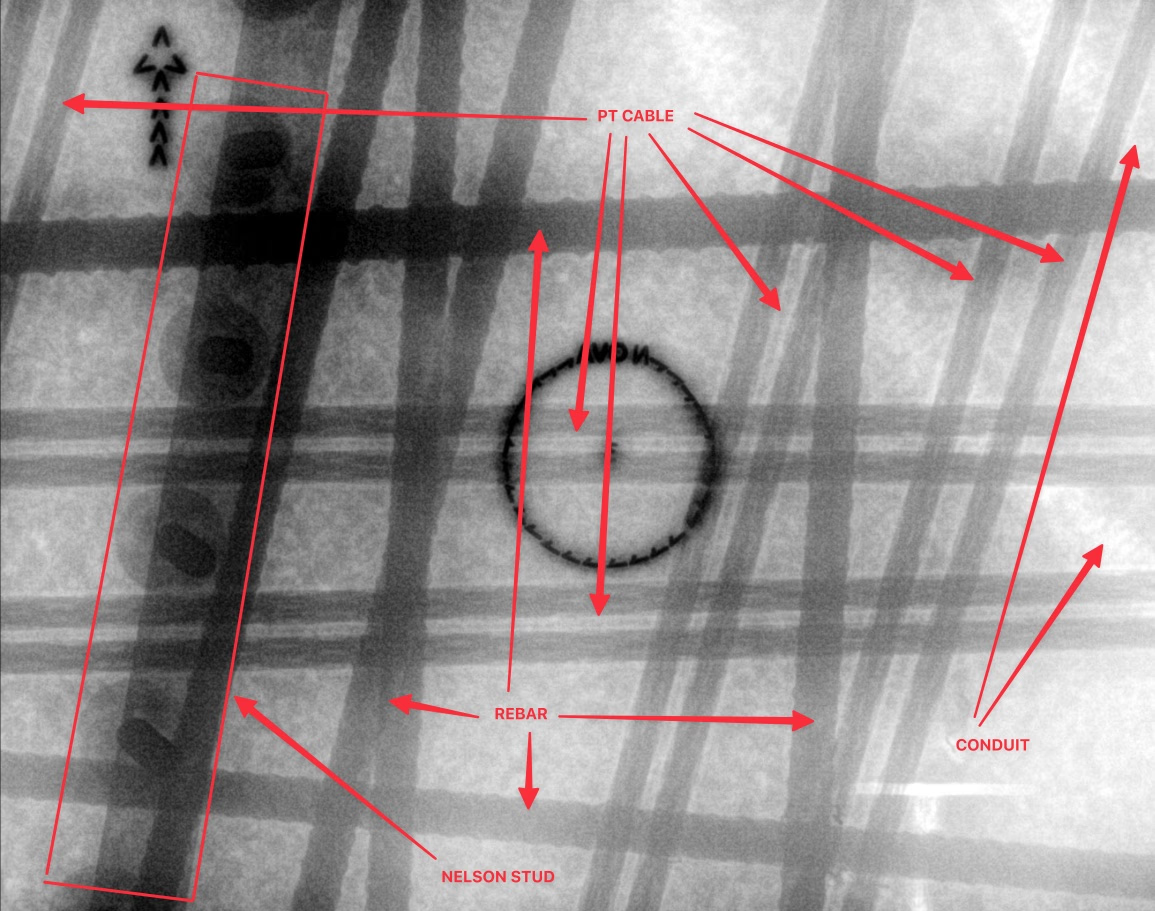
That distinction becomes very real on suspended slabs with dense reinforcement, conduit, post-tension, embedded utilities, and tight core locations. In those conditions, GPR can still start quickly, but the advantage can disappear once the crew reaches one difficult spot. The slab is busy, the signals overlap, and interpretation becomes harder. The one location that matters most can still remain unclear.
From your side, that is the real issue. The job does not move forward on “probably.” It moves forward on decisions.
That is where Digital Concrete X-Ray fits. Not as a replacement for GPR across the whole slab, but as a stronger second method for the smaller number of locations where GPR alone stops being the lowest-risk option. GPR handles the majority of the slab. X-ray is used where certainty actually matters.
So this is not about abandoning the familiar method. It is about recognizing when that method reaches its limit on a specific location, and using a stronger one before uncertainty turns into delay or damage.
If this part worries you, it is usually because of how radiography used to work on sites.
When teams hear “x-ray,” they often think of sealed radioactive sources, cleared floors, overnight work, and major disruption. That reaction is understandable. It is also exactly what people are reacting to when digital concrete x-ray is first mentioned.
The important part is that modern digital concrete x-ray does not work like that older process.
It is an electrically generated system. Radiation is produced only when the unit is active. Power on, shot taken, power off. The exposure window is typically 30 to 180 seconds, with about a 15-foot exclusion zone on the working side and 50 feet below the slab. Work can continue during regular site hours with basic coordination.
This is not a shutdown. It is a controlled activity.
From a Superintendent’s perspective, the real concern is not radiation itself. It is control.
Do we need to clear the floor?
Do we need night work?
Will this stop production?
In practice, the answer is no. The area is controlled for a short period, the shot is taken, and work continues. It requires coordination, but it fits into a normal jobsite workflow.
Once that is understood, the concern usually shifts from
“Can we even do this?”
to
“How do we plan it properly?”
This is probably the first question you would ask, and it is a fair one.
On a line item, the comparison looks simple. A targeted Digital Concrete X-Ray shot can run about one-and-a-half to two times the cost of a standard GPR check. If you stop there, the cheaper option looks obvious. But on a live job, that is usually the wrong comparison. The real comparison is not scan cost versus scan cost. It is scan cost versus the cost of getting a critical drilling decision wrong.
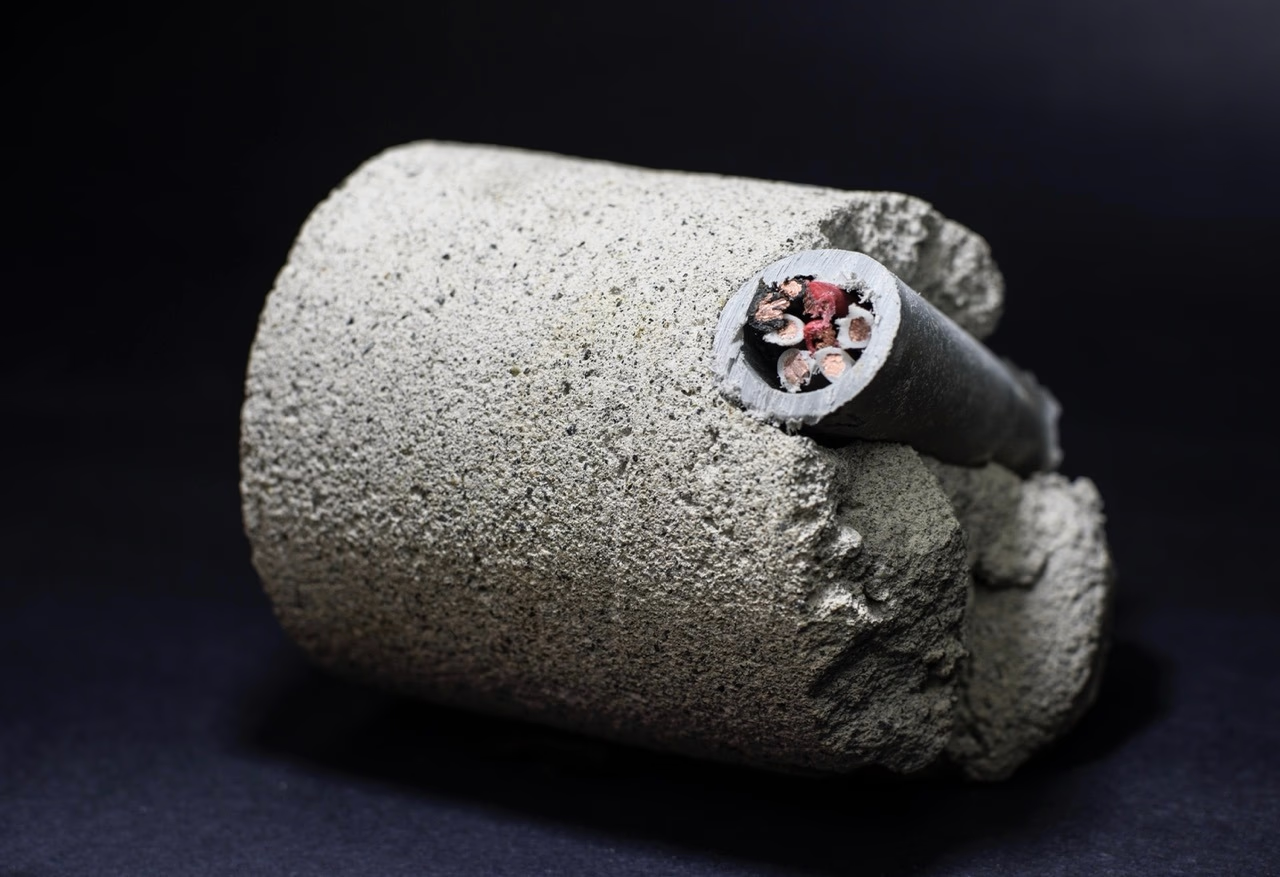
That difference matters most on a congested slab. A GPR technician can spend 20 to 30 minutes, or more, on one difficult location, checking and rechecking, and still leave with an uncertain answer. At that point, the project has already paid for time and still does not have what it actually needed: confidence.
And that is where the issue changes from scanning to decision-making.
One unclear location is rarely just one unclear location. It may hold up penetrations, layout, coring, or coordination with trades working above and below the slab. If the location gets rejected, the layout may shift. If it gets escalated, engineering gets involved and the workflow slows down. If the team proceeds anyway and something gets hit, the cost shows up immediately in repairs, delays, coordination, and sometimes structural review. That is the core point behind the original Radii-X article: on the wrong location, the real cost is not the scan, it is getting the drilling decision wrong.
There is also a labor reality here that gets overlooked. The source compares one GPR operator spending about 30 minutes on a congested location against an x-ray crew resolving the same decision in roughly 15 minutes with two people. The labor picture is not as far apart as many people assume. The bigger difference is certainty. One method may still leave room for interpretation. The other is being used because that interpretation gap is exactly the problem.
So yes, the shot costs more than a basic scan. But on the locations that actually drive risk, the more useful question is not whether x-ray is the cheaper scan. It is whether uncertainty is actually the cheaper decision.
At first glance, it can seem like it will.
There is more setup than a quick GPR pass, and in some cases access is needed from both sides of the slab. On a busy site, anything that sounds like extra setup can immediately feel like extra delay.
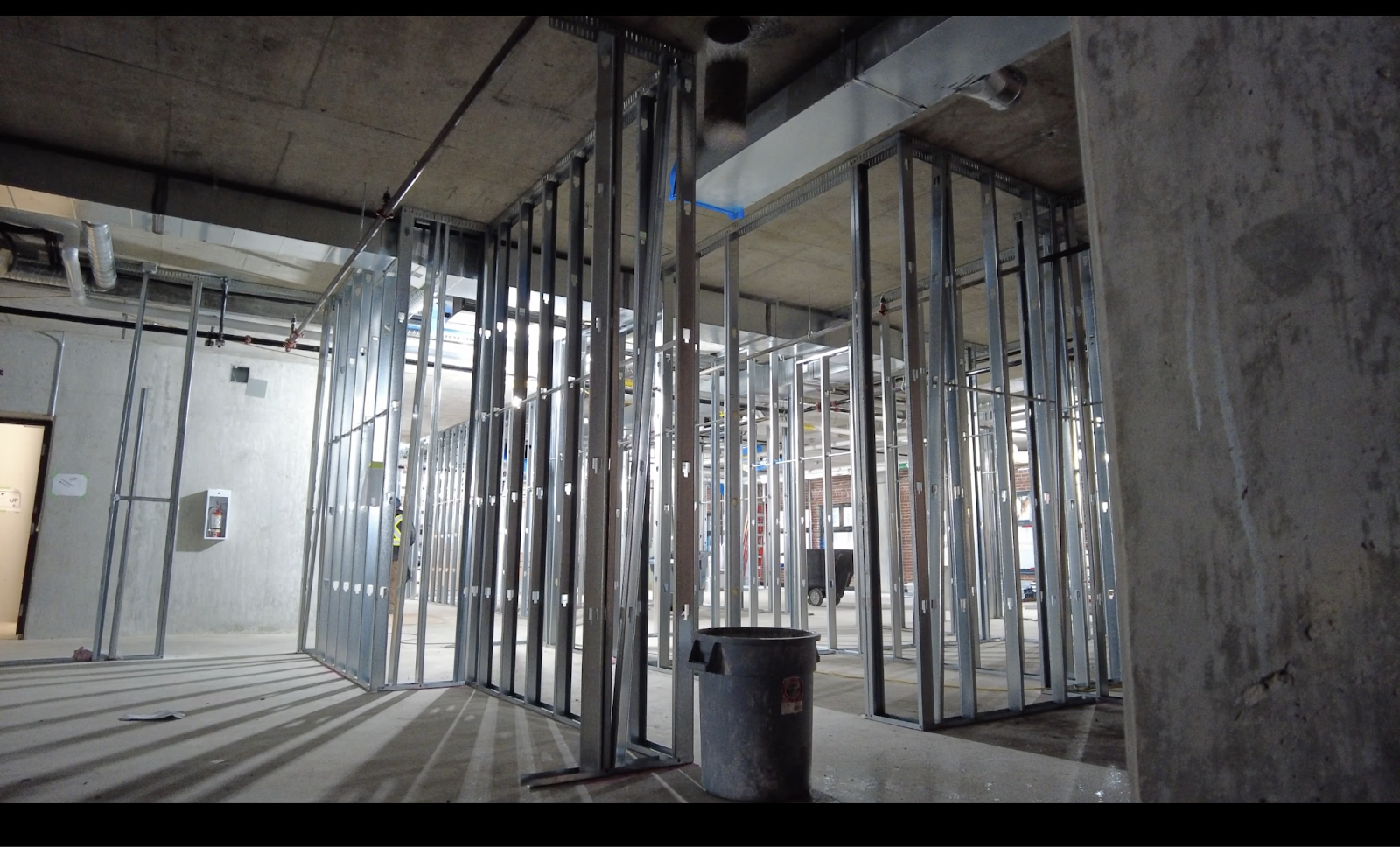
But the better question is not whether the scan itself takes slightly longer. The better question is what happens if the location is not fully understood before drilling.
Because a drilling decision is not just about what is inside the slab.
It is about the entire path.
A location may look acceptable from the top, but underneath there may be ductwork, piping, or clearance issues that make it unusable. If that is discovered after drilling begins, the impact is immediate. The core stops, crews wait, and coordination starts again.
That is where the real slowdown happens.
Two-sided access is not random complexity. It is often part of making the drilling decision correctly. The goal is to confirm the full condition before anyone commits to the hole.
Digital concrete x-ray helps shift that risk earlier. Instead of discovering problems during execution, they are resolved before drilling starts.
So while the setup may be more involved, it often reduces overall disruption. Because the job does not have to stop and adjust later.
This concern usually creates the most friction.
The job starts with a plan. The budget is set. The scanning method is assumed. Everything is aligned.
Then the slab turns out to be more complex than expected.
Certain locations do not resolve clearly. The congestion is higher than anticipated. The margin for error gets smaller. And now a different method is being introduced.
From your side, that can feel like a shift.
Why is this coming up now?
Why was this not part of the original scope?
That reaction is understandable. Once a job and estimates is approved and moving, any change creates pressure.
But this situation is not unusual.
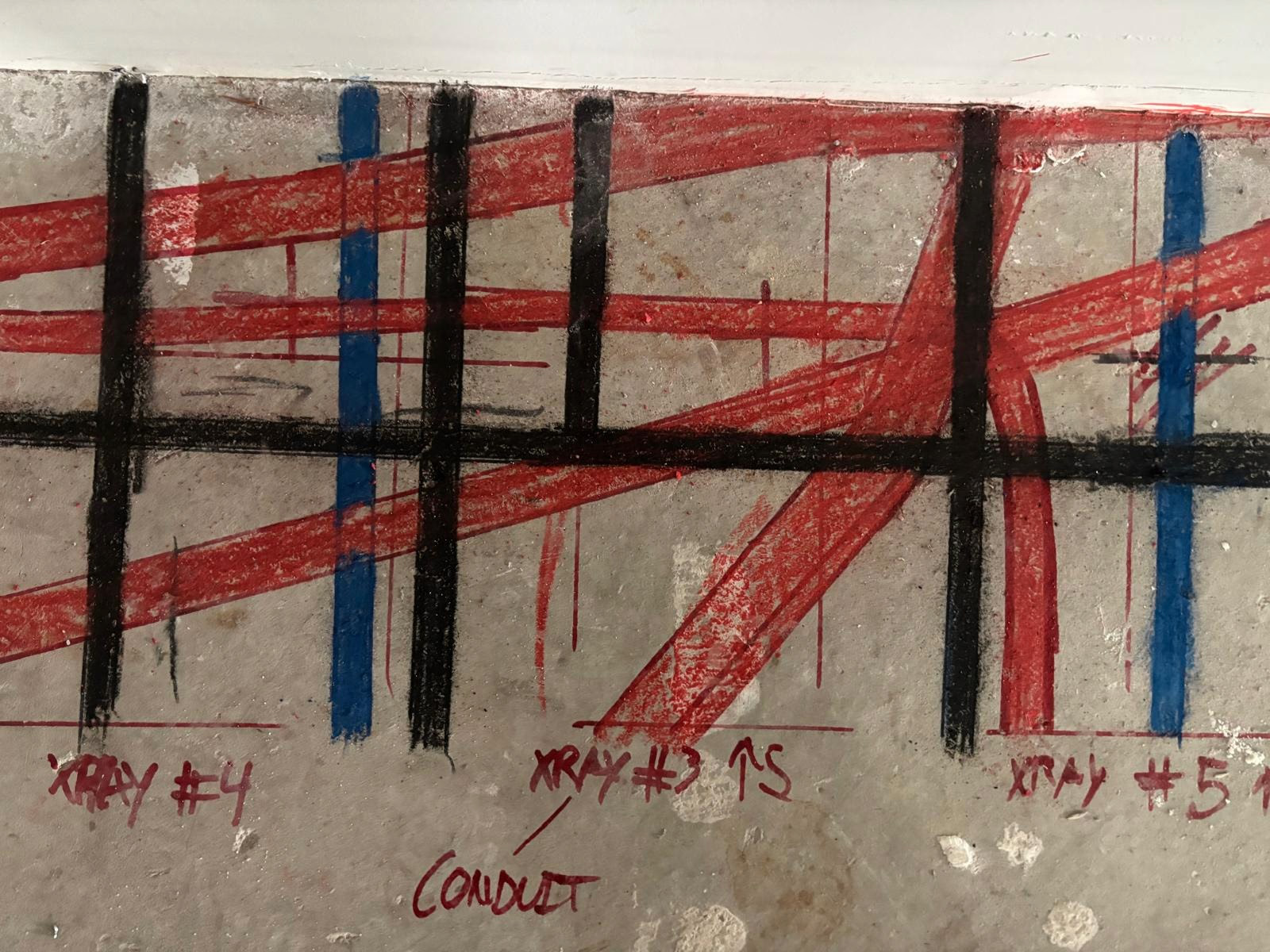
Concrete is one of the few elements where actual conditions remain hidden until the work reaches that point. Drawings provide a general layout, but they do not always reflect the real congestion at a specific location. Most of the slab may resolve normally, and only a few areas require a different approach.
That is the key distinction.
This is not a surprise add-on.
It is a response to what the slab is actually showing.
A straightforward way to explain it is:
“We didn’t plan to switch methods. We ran the standard scan. When we saw what was in this slab, continuing with GPR carried more risk than changing methods.”
And that is the reality in the field.
If the team proceeds anyway, the risk does not disappear. It moves downstream.
If they stop and escalate, the schedule takes the hit.
So the real question becomes:
Where do you want that cost to show up?
Once that is clear, the conversation becomes much easier.
Most of the time, what is really giving you pause is not the technology itself.
It is about cost, unfamiliarity, workflow disruption, and the concern that something unnecessary is being added to a job that was already budgeted and scoped. That is actually useful, because those are practical concerns.
GCs and owners already understand bad core hits, rework delays, redesign loops, and congested slabs. They do not need a product pitch. They need one clear connection made: yes, this method may cost more on the scan line, but on the wrong location, it can cost less than the mistake.
Use GPR where GPR is the right tool. Most of the time, it is.
Use Digital Concrete X-Ray where the slab is congested, the path is too critical to leave uncertain, or the cost of a wrong drilling decision is higher than the cost of a better answer.
Do not think of x-ray as a different world of workflow. Think of it as the stronger next step for the specific locations where the standard method has reached its limit.
Digital Concrete X-Ray does not require a hard sell. It requires the right situation, the right explanation, and the right workflow. If you want to see how it fits into a real jobsite and how teams use it alongside GPR, Nova Advanced can walk you through the process step by step.